Pregnancy is one of the rare times when being active can genuinely make a meaningful difference to how you feel day to day, how your body copes with the physical demands of pregnancy, and how well you recover afterwards. For most women, exercise in pregnancy is not only safe, but strongly beneficial when it is done sensibly and adapted to the stage of pregnancy and any individual medical considerations.
Exercise in pregnancy: why it matters
Many women worry that exercise might be too much for the baby or might somehow “cause harm”. In an uncomplicated pregnancy, that is usually not the case. In fact, movement supports circulation, helps maintain strength and stamina, and can reduce some of the common discomforts that make pregnancy feel harder than it needs to be.
Exercise can also help with back pain, constipation, swelling, and disturbed sleep. It may improve mood and reduce stress, which matters because pregnancy is not only physical; it is emotional too. For many women, staying active helps them feel more in control of their bodies at a time when so much is changing.
What it can help with
One of the most useful things about exercise in pregnancy is that it tends to support the everyday challenges, not just fitness in the abstract. Regular activity may help you feel less breathless during normal tasks, improve posture, and reduce the strain on your joints and lower back. It can also help with weight management, blood sugar control, and overall cardiovascular health.
There is also a real benefit for labour and recovery. A body that has kept moving generally tolerates the demands of pregnancy better and may recover more comfortably afterwards. That does not mean exercise guarantees an easy labour, of course, but it does mean you are giving yourself a better foundation.
What is safe
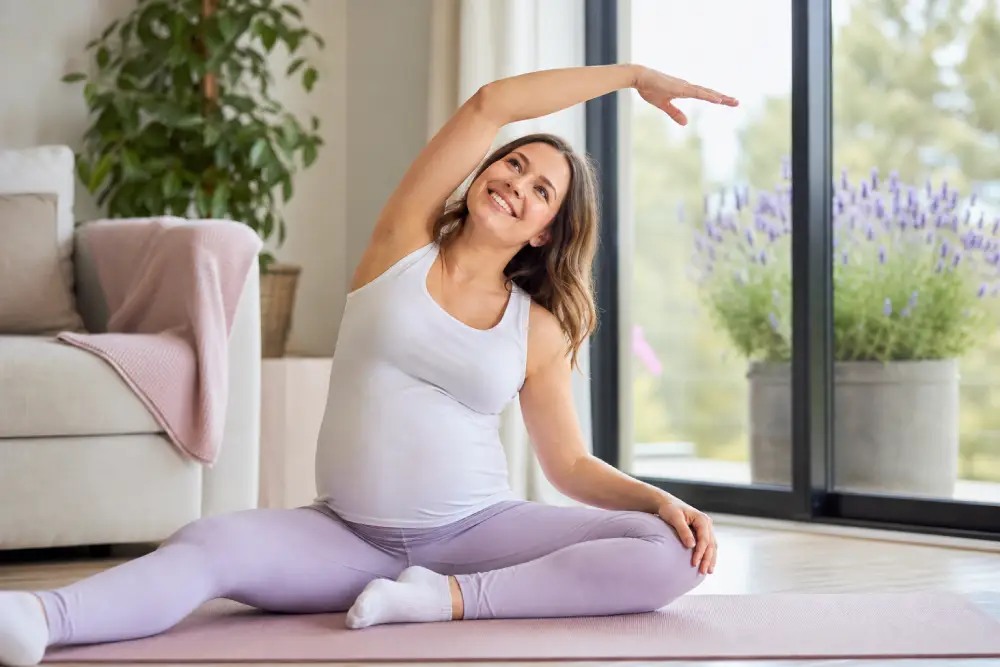
For most pregnant women, the safest exercises are the ones that are steady, moderate, and kind to the body. Walking, swimming, stationary cycling, prenatal Pilates, and pregnancy-adapted yoga are all excellent options. If you were active before pregnancy, you will often be able to continue much of what you were already doing, with sensible adjustments.
The goal is not to push hard or chase performance. Pregnancy is not the time for extremes. It is the time for consistency, comfort, and listening carefully to your body. You should be able to talk while exercising; if you are completely breathless, you are probably doing too much.
How to approach it
A useful way to think about exercise in pregnancy is to keep it regular rather than intense. Little and often is usually better than occasional bursts of effort. A brisk walk most days, some gentle strength work, and a few minutes of stretching or mobility can go a long way.
Strength work can be particularly helpful, especially for the back, hips, pelvic floor, and posture. It does not need to be complicated. Simple, well-controlled movements done properly are often more valuable than ambitious gym routines. The key is technique, not bravado.
Hydration matters, and so does avoiding overheating. Pregnancy changes how the body regulates temperature, so it is sensible to avoid exercising in very hot conditions and to keep well hydrated before, during, and after activity. Comfortable clothing and supportive footwear also make a real difference.
When to slow down or stop
There are some situations where exercise needs to be modified, reduced, or avoided altogether, and this is where personalised advice matters. Women with placenta-related bleeding, reduced fetal growth, significant anaemia, certain heart or lung conditions, threatened preterm labour, ruptured membranes, or other obstetric complications may need individual guidance.
Even in an uncomplicated pregnancy, you should stop and seek medical advice if you develop vaginal bleeding, abdominal pain, regular contractions, dizziness, faintness, chest pain, severe shortness of breath, or reduced fetal movements. These are not symptoms to ignore or “push through”. Pregnancy exercise should leave you feeling better, not unwell.
What to avoid
Some activities carry a higher risk of falls or abdominal impact and are best avoided. These include contact sports, skiing, horse riding, scuba diving, and anything with a significant risk of collision or trauma. After the first trimester, many women also find it uncomfortable to lie flat on their back for long periods, so exercises may need to be adapted accordingly.
It is also sensible to be cautious with very hot yoga, strenuous maximal lifting, or anything that causes breath-holding and strain. Pregnancy is not the time to chase personal records. It is the time to preserve fitness safely and intelligently.
A reassuring message
The ideal approach is not perfection. It is movement that is realistic, sustainable, and appropriate for you. Some days that may mean a proper walk and a strength session; other days it may mean a gentler pace, a stretch, or a rest day. That flexibility is not weakness — it is good pregnancy care.
If you are uncertain where you fit, especially if you have a medical condition or pregnancy complication, it is worth discussing exercise individually with your obstetrician or midwife. The right advice should make you feel safer and more confident, not more anxious.
A well-managed pregnancy exercise plan is not about doing more. It is about doing the right amount, in the right way, for the right reason: to support a healthy pregnancy and help you feel as well as possible while you are carrying your baby.
Frequently Asked Questions
1. Is it actually safe to exercise during pregnancy?
For most women with an uncomplicated pregnancy, yes, it is safe — and strongly encouraged. The evidence shows that regular, moderate activity does not harm the baby and is linked to better outcomes for both mother and baby. It can help with weight management, blood pressure, blood sugar, mood and sleep, and may reduce the risk of complications such as gestational diabetes and preeclampsia. What matters is tailoring the type and intensity of exercise to your health, your pregnancy, and your starting fitness.
2. How much exercise should I aim for?
A helpful guide is to aim for around 150 minutes of moderateintensity activity spread across the week, if that feels manageable for you. In practice, that might look like a 20–30 minute walk most days, plus some gentle strength or Pilatestype work a couple of times a week. If you were active before pregnancy, you may be able to continue at a similar level with sensible adjustments. If you were less active, it is absolutely fine to start small and build up gradually — even 10 minutes at a time is worthwhile.
3. What kinds of exercise are best in pregnancy?
The best forms of exercise are those that feel comfortable, sustainable, and lowrisk. Walking, swimming, stationary cycling, prenatal yoga, and pregnancyadapted Pilates are all excellent options. Simple strength exercises that support your back, hips, legs and pelvic floor can be very helpful, and they do not need to involve heavy weights or complicated routines. The key is controlled, steady movement rather than anything highimpact, highrisk or competitive.
4. Are there types of exercise I should avoid?
Yes. Anything with a high risk of falls, heavy impact or abdominal trauma is best avoided in pregnancy. That includes contact sports (such as rugby or martial arts), skiing, horse riding, and activities with a real risk of collision. Scuba diving is not advised in pregnancy. As your bump grows, exercises that involve lying flat on your back for long periods or doing sudden, jerky movements may need to be adapted. Very hot environments (such as hot yoga) and maximal heavy lifting are also best approached with caution, or avoided.
5. How will I know if I’m doing too much?
Your body is usually a reliable guide. During exercise, you should still be able to hold a conversation — if you are gasping for breath or feeling faint, it is too intense for pregnancy. You should stop exercising and seek medical advice urgently if you experience vaginal bleeding, painful contractions, chest pain, sudden shortness of breath, severe dizziness, fluid leaking from the vagina, or if you notice a change or reduction in your baby’s movements. Exercise in pregnancy should leave you feeling pleasantly tired or energised, not unwell or alarmed.
See an Obstetrician?
We’ve made it simple for you to schedule an appointment right away via Whatsapp.
For most women with an uncomplicated pregnancy, yes, it is safe — and strongly encouraged. The evidence shows that regular, moderate activity does not harm the baby and is linked to better outcomes for both mother and baby. It can help with weight management, blood pressure, blood sugar, mood and sleep, and may reduce the risk of complications such as gestational diabetes and preeclampsia. What matters is tailoring the type and intensity of exercise to your health, your pregnancy, and your starting fitness.