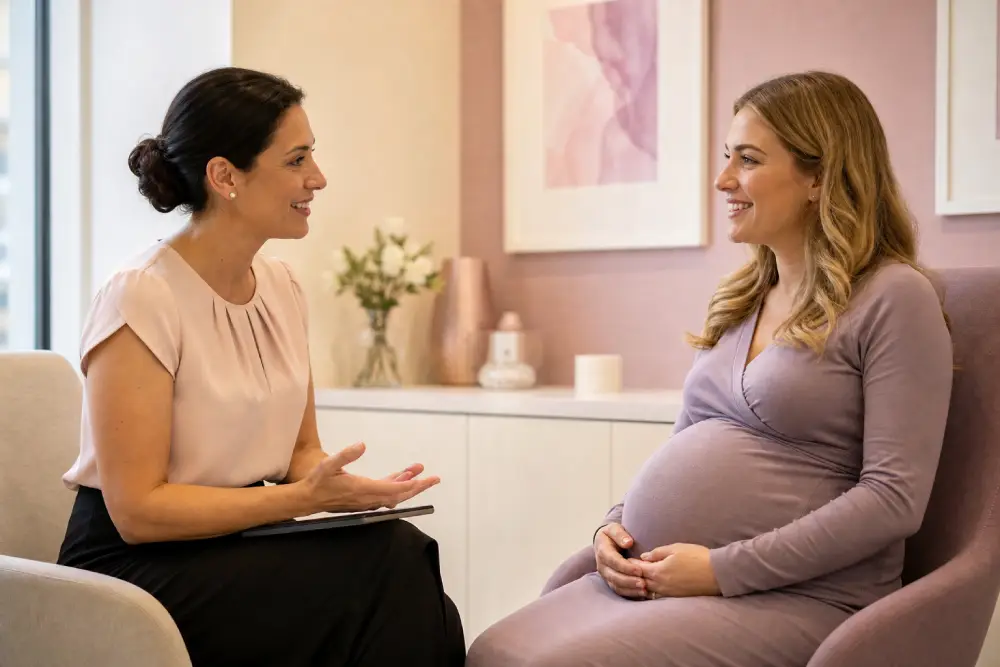

Over the past two decades, the conversation around pregnancy and maternal age has changed dramatically. More women than ever are choosing to start their families later in life, and for many, this is not accidental or “too late” , it is a thoughtful, informed, and deeply personal decision.
Women today are studying longer, building careers, travelling, finding stable relationships later, caring for ageing parents, or simply waiting until they feel emotionally and financially ready for motherhood. Lifestyle and society have changed. Medicine has changed too. Yet despite this, many women still arrive in pregnancy feeling anxious, apologetic, or even judged simply because of their age.
I am a strong advocate for women who choose to have children later in life. Many of these women are thoughtful, informed, healthy, and deeply committed to motherhood. Rather than judging the timing of pregnancy, I believe in supporting women through it with honesty, compassion, and evidence-based care.
Age matters in pregnancy. But it is only part of the story.
Why More Women Are Having Babies Later
The average age of first-time mothers has steadily increased across the UK and many parts of the world. This shift reflects broader social and cultural changes rather than a single cause.
Many women choosing pregnancy later are exceptionally health-conscious. They may exercise regularly, eat well, avoid smoking, monitor their health carefully, and approach pregnancy with enormous preparation and intention. These are often women who have spent years building stable lives before becoming parents.
At the same time, fertility treatment and assisted conception have advanced significantly. IVF and fertility preservation have allowed many women and couples to conceive who may not previously have had the opportunity.
The language around “older mothers” can sometimes feel outdated or unnecessarily alarming. Terms such as “Advanced maternal age” understandably upset many women and are increasingly avoided in modern clinical practice. What matters far more is the individual woman in front of us her health, her pregnancy, and her support system.
What Does Maternal Age Actually Mean Medically?
From a medical perspective, maternal age becomes relevant because certain risks gradually increase with age. This does not mean problems will happen. It simply means we monitor pregnancy more carefully and personalise care accordingly.
As women get older, there is a slightly increased likelihood of conditions such as:
High blood pressure and pre-eclampsia
Gestational diabetes
Placental problems
Miscarriage
Chromosomal conditions such as Down syndrome
Caesarean birth
Reduced fertility and longer time to conception
However, statistics can sometimes sound frightening when removed from context. Relative risk is not the same as absolute risk.
For example, a woman in her early forties may have a higher statistical risk of certain complications compared with a woman in her twenties, but many women in their late thirties and forties still have entirely healthy pregnancies and healthy babies.
The key is understanding risk properly rather than emotionally.
Modern obstetrics is increasingly focused on identifying which women genuinely need additional support and which women simply need reassurance and sensible monitoring.
This is why modern pregnancy care has become far more individualised.
We no longer look at age in isolation. We assess the whole picture:
Medical history
Lifestyle
Blood pressure
Metabolic health
Previous pregnancies
Fertility treatment history
Family history
Placental function
Fetal growth and wellbeing
Good obstetric care is nuanced. It is not simply about putting women into categories.
The Emotional Burden of Pregnancy Later in Life
Many women tell me they feel they are constantly reminded of their age throughout pregnancy. Some feel spoken to differently in clinics. Others become overwhelmed by internet statistics and frightening headlines.
There can also be a subtle societal contradiction. Women are encouraged to pursue education, careers, independence, and financial stability yet can simultaneously feel criticised for not having children earlier.
This emotional burden is real.
Women who conceive later are often highly invested in their pregnancies. Some may have experienced years of infertility, miscarriage, IVF treatment, or significant emotional uncertainty before becoming pregnant. Others may be balancing careers, caring responsibilities, or complex family situations alongside pregnancy.
Compassionate care matters enormously here.
Pregnancy should not become an experience dominated by fear because of a date of birth.
How Modern Obstetrics Supports Women of Advanced Maternal Age
The reassuring reality is that pregnancy care has evolved significantly. We now have far better screening tools, surveillance methods, and multidisciplinary care pathways than ever before.
Women may be offered:
Early pregnancy assessment
Detailed chromosomal screening
Additional growth scans
Monitoring for blood pressure and diabetes
Aspirin to reduce pre-eclampsia risk where appropriate
Individualised birth planning
Importantly, most of this care is preventative and supportive rather than reactive.
One of the greatest advances in obstetrics is our increasing ability to identify concerns early and intervene appropriately before complications develop.
For many women, simply understanding why monitoring is recommended can reduce anxiety considerably. Extra scans or appointments are not necessarily signs that something is wrong. Often, they are simply part of careful modern care.
Fertility and Time: An Honest Conversation
While it is important not to stigmatise later motherhood, it is equally important to speak honestly about fertility.
Female fertility does decline with age, particularly after the mid-thirties. Egg quantity and quality both reduce over time, and conception can take longer. Miscarriage rates also increase gradually with age.
This can be difficult information emotionally, particularly for women who feel they have not yet met the right partner or circumstances.
But honesty and fear are not the same thing.
Women deserve accurate information without catastrophising. They also deserve support rather than blame for realities that are often shaped by life circumstances far beyond simplistic personal choice.
Increasingly, we are also seeing conversations around fertility preservation, egg freezing, and reproductive planning becoming part of broader women’s healthcare discussions. These conversations are valuable because they allow women to make informed decisions earlier if they wish to.
A Healthy Pregnancy Is About More Than Age
The foundations of a healthy pregnancy remain remarkably consistent regardless of age.
Good pre-pregnancy and antenatal care can make a substantial difference. This includes:
Optimising weight and nutrition
Regular exercise
Folic acid and vitamin supplementation
Avoiding smoking and excessive alcohol
Managing blood pressure and metabolic health
Controlling existing medical conditions
Good sleep and mental wellbeing
In many cases, focusing on modifiable health factors has a greater impact on pregnancy outcomes than age alone.
This is one reason why many healthy women in their late thirties and forties do extremely well in pregnancy.
The Importance of Individualised, Non-Judgemental Care
Every pregnancy carries its own story.
Some women conceive quickly and naturally at 42. Others struggle at 32. Some younger women develop serious complications, while some older women have remarkably straightforward pregnancies.
Medicine works best when it moves beyond stereotypes.
As obstetricians, our responsibility is to support women through complexity with honesty, evidence, and compassion. Not to reduce them to a number. Not to frighten them unnecessarily. And certainly not to make them feel guilty for the timing of motherhood.
Maternal age matters medically because it helps guide care. But motherhood itself does not have a single correct timeline.
For many women, later pregnancy reflects maturity, stability, resilience, and deeply considered decision-making. These women deserve balanced information, thoughtful care, and confidence not judgement.
Final Thoughts
The conversation around maternal age needs more nuance and less fear. Most importantly, women deserve to feel supported rather than defined by their age. Pregnancy later in life is increasingly part of modern society. The role of healthcare is not to judge that shift, but to understand it, support it safely, and care for women as individuals. Because behind every statistic is a person, a family, and a story.
See an Obstetrician?
We’ve made it simple for you to schedule an appointment right away via Whatsapp.